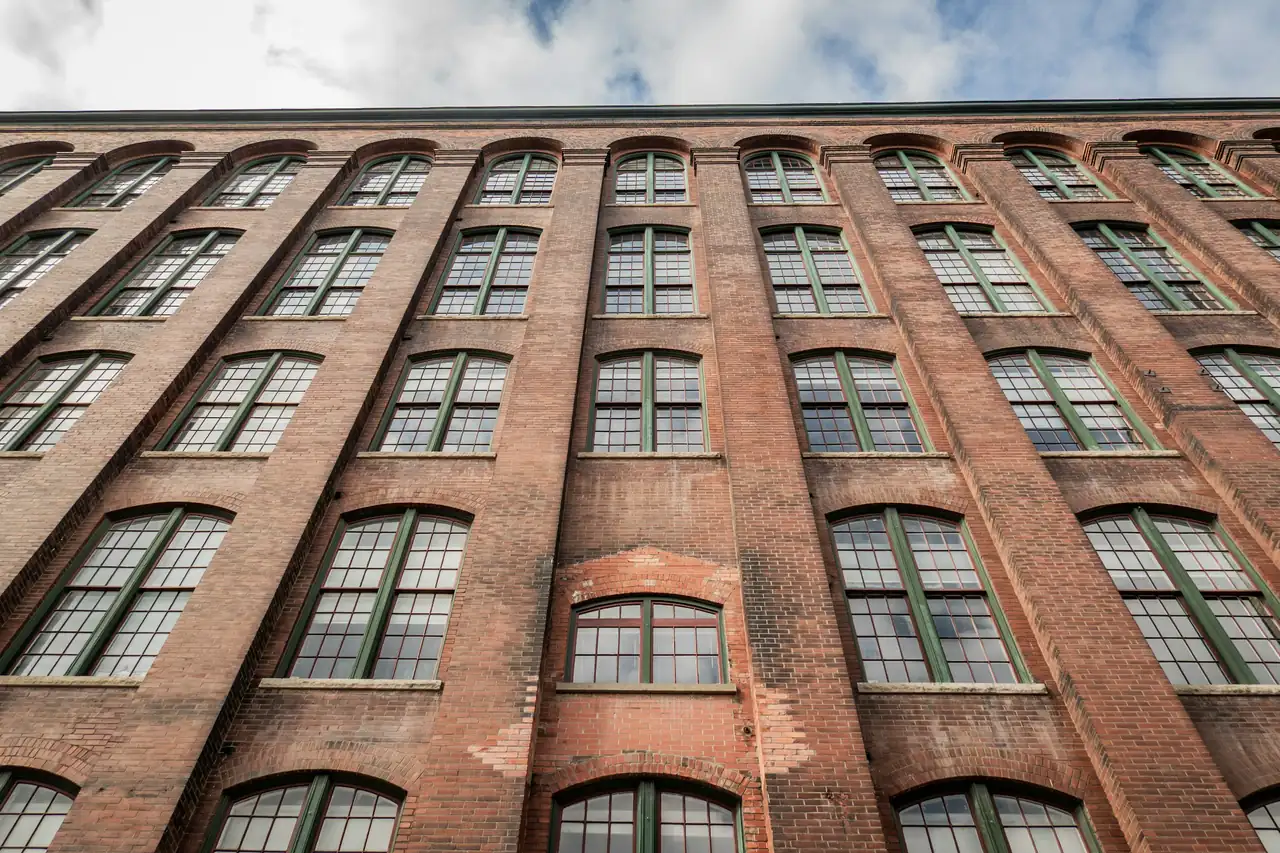
The Redstone Fabrication mill in Independence has reopened after a $28 million retrofit that gutted the interior of a 1911 brick building while leaving its facade, sawtooth roof and most of its machinery intact. The building dates to 1911, and the retrofit took two full years.
The building was closer to a second life than a first. Redstone Fabrication, a maker of precision metal components, announced its closure in 2023, and the property changed hands twice before a local investor group bought it for $9.4 million in early 2024. The company had 74 employees when it closed, and its owners said a move out of state was the only offer on the table.
The structure itself needed more than a cleaning. Engineers found the original 1911 timber roof trusses degraded in three bays and the sawtooth glazing, a hallmark of early industrial daylight design, beyond repair in the northern third of the building. That inspection cost $340,000, and the developer says the structural work accounted for just under half of the project.
What survived is the part that makes the project worth a look. The red brick walls, the arched window openings on the south elevation and the mill's characteristic sawtooth roof were stabilized and re-glazed, and the 180-foot long original floor plate was kept clear. The floor plate also retains its original overhead cranes, two of which have been recommissioned for the new tenant.
The retrofit added what the building lacked: an indoor air handling system rated for metalworking, a substation capable of running electric arc furnaces, and 60,000 square feet of leasable warehouse space on a second floor. That equipment cost $2.1 million, and it is the reason the project cost more than a rebuild would have.
What it took to save the shell
The demolition number was $5.1 million before we built anything. That difference is what keeping a facade and a roof shape costs.
Redstone Fabrication moved 190 employees back into the building and expects to add 40 as electric furnace work ramps up, which is the part that matters for a city that has watched industrial employers leave for years. The company has also committed to a second shift, which would add another 30 jobs in the second year of operation.
The economics were helped by two things. A state historic tax credit covered about $6.2 million of the work, and the new tenant is buying its power on a 15-year fixed arrangement from a solar developer that built a 4.1 megawatt array on the adjacent lot. The array sits on six acres that the mill previously used for outdoor storage of finished parts.
Reuse is not always the cheapest path. A demolition contractor's estimate for the same site came to $5.1 million before any new building was constructed, and the difference between that number and the actual cost is the price of keeping a facade and a roof shape. That comparison is the argument that gets a city council to approve a tax credit for an old wall.
Reuse against a price tag
The developer has moved on. A second 1912 building two blocks away, also in Independence, received state approval for a similar conversion into workspace and light manufacturing, and construction is expected to begin in the summer. Together they represent the largest reuse program in Independence's industrial corridor since the mill district was designated a historic district.