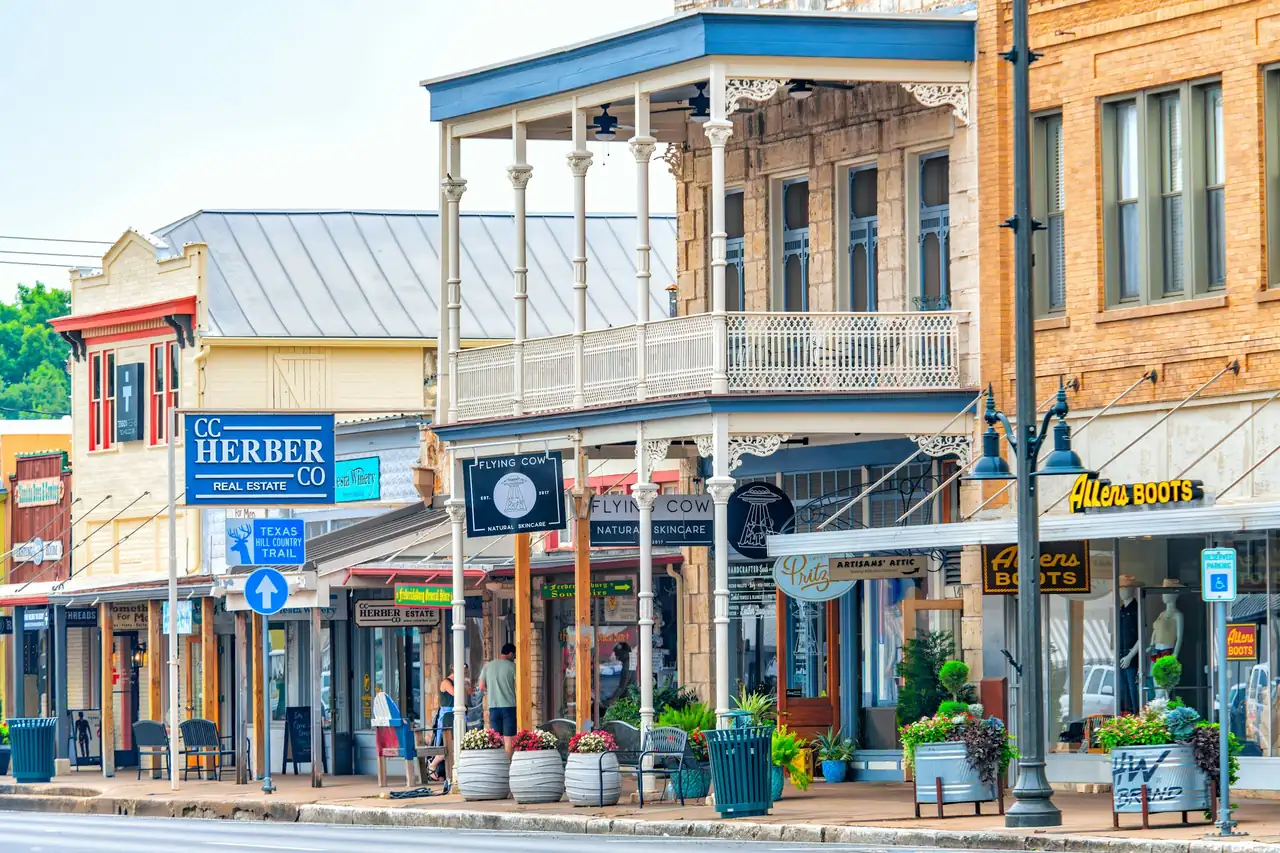
The storefronts along Overland Park's downtown stretch have changed hands repeatedly since 2024, and now the district's small retail vacancy has tightened to just two suites. Fourteen local businesses are on waiting lists for space they cannot find, and two older buildings are being converted to make room. The block is changing faster than the leases are being signed.
Storefront leases on the downtown block average 2,100 square feet and run $18 to $24 a square foot, which in a market where big-box retail pays $8 to $10 is why the small independents keep showing up. Six leases were signed in the past twelve months by businesses that had been priced out elsewhere in Johnson County. None of the six leases required new construction, which is why the block changed so fast.
The newest arrivals are food-adjacent and service-heavy: a bakery, a ceramics studio with six seats, a bike repair shop and a bookkeeping firm that moved out of a rented house in Prairie Village. Two are entirely new to the district, and four relocated from strip malls that have been repositioning around anchor tenants.
Two Rivers Coffee, which opened on the block last spring, cited foot traffic as the reason for the lease and said it paid a premium for the corner position. Owner Wanda Okoye said the neighborhood now has enough evening activity that the block no longer empties at six, which had been the deciding factor against it.
Bellweather Grocers, a specialty grocer that expanded into the district in the fall, took 3,400 square feet and is operating a pickup counter that handles 60 online orders a day. It is one of a small number of independents treating the downtown street as a fulfillment site as well as a sales floor. Her leases now include two curbside pickup bays and a dedicated cooler for grocery orders.
The block no longer empties at six. That sounds small, but evening activity is the difference between a store and a room with products in it.
Not every independent is thriving. A former tenant of a neighboring block said rent, labor and insurance together added roughly 30% to operating costs in three years, and that a good location now only offsets that if a business sells four days a week rather than five.
The landlord side has been active too. Two of the older buildings on the block, both single-story and built in the 1960s, were bought by investors who have applied for tax credits to convert them into small office suites, which will add an estimated 18 small spaces to the district over the next two years.
City records show the downtown subarea has approved 43 business licenses this year, up from 27 last year, with food service accounting for 22 of them. That mix suggests the block is diversifying even as it tightens, with restaurants adding density rather than displacing the remaining retailers. Of those 22 food licenses, 15 are for operators with a single location.
The wait list is the more telling number. Fourteen owners have told the Journal they would sign if space existed, and the district's leasing agent said three of them are ready to move within 60 days of a lease, which makes the next vacancy a scheduling problem rather than a demand problem.