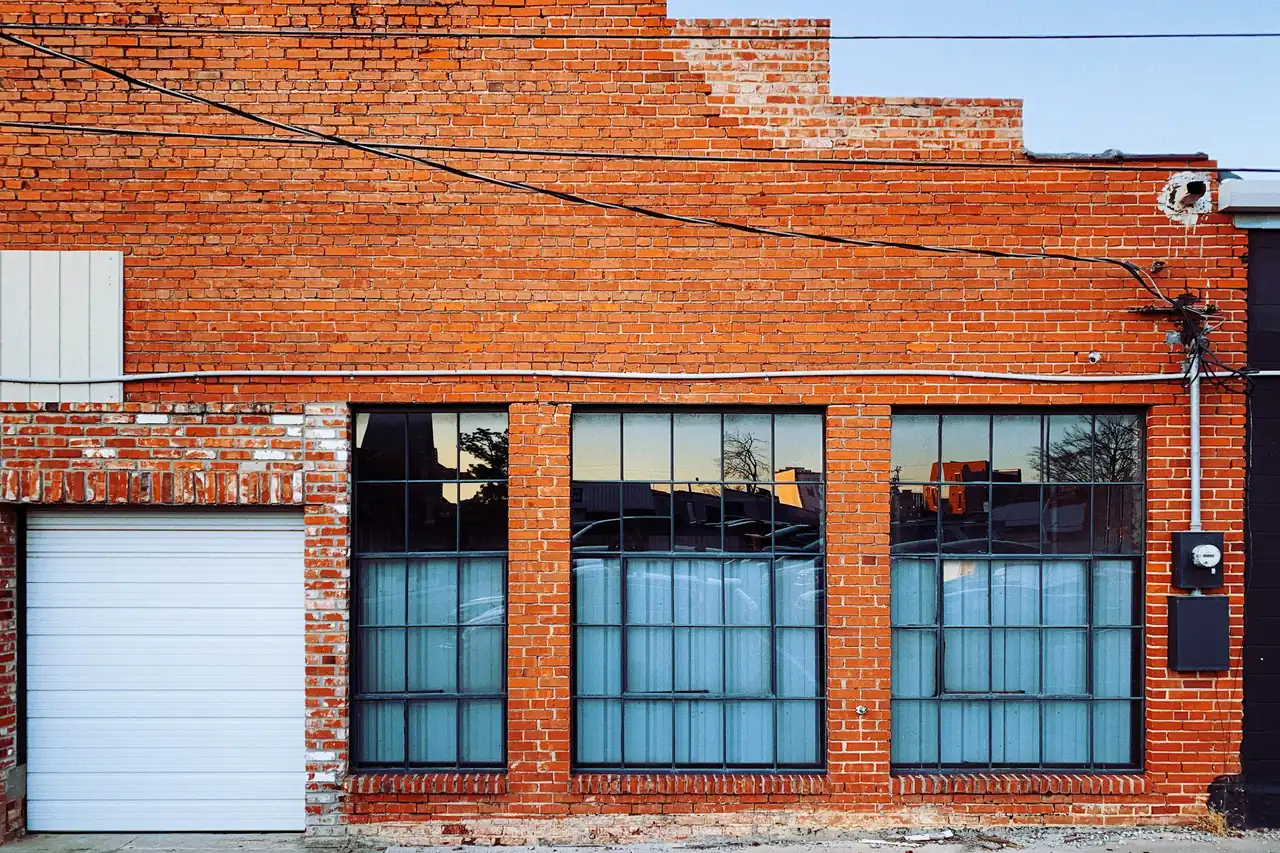
A new block of tenant space opened in the Crossroads Arts District this fall, and it was half leased before the paint dried. Creative-office occupancy in the district has now climbed past 94%, according to leasing data compiled for the Journal, and the landlord says the pipeline behind it is stronger than it was a year ago.
The building at the north edge of the district looks like the rest of the neighborhood: red brick, loading doors, the kind of industrial shell that planners spent a decade arguing over. What is new is what happens inside it. Two floors of what had been a parts distributor are now studio space, and the landlord says 71% of it is leased, with tenants moving in during the summer.
The project is the work of Larkspur Development, a local firm that has made a specialty of converting older industrial stock in the district. Its three-building portfolio has absorbed a soundtrack studio, a prop house, two animation shops and a nonprofit performing arts company, a mix that reflects how the neighborhood actually works day to day.
Leasing data compiled for the district's quarterly update shows creative-office occupancy at 94.3%, up from 88.1% a year earlier. Rents for loft space with exposed brick and operable windows have moved to $22 a square foot on a full-service basis, roughly 9% more than 2025 pricing, according to brokers who work the submarket.
That scarcity is the point, and it is also the risk. Brokers say the tenant mix has shifted from early-stage studios to groups with payroll, which means leases are longer and the buildings are being asked to handle conference space, ventilation upgrades and parking that a small animation shop never required.
Landlords are splitting floors into 1,400 square foot suites because the tenants who can fill a whole floor today cannot all be found.
Landlords are responding by splitting space. One landlord in the district is marketing suites of 1,400 square feet for teams that would have taken a whole floor two years ago, a strategy that keeps occupancy high while testing the market for the kind of studio that can still be financed from a small balance sheet.
Not everyone is convinced the district can absorb another wave. A local tenant broker who asked not to be named said the vacancy math looks tight partly because three properties in the district count a single anchor tenant across multiple buildings, which flatters the occupancy rate in any quarter they choose.
That nuance has not slowed leasing. Two of the district's newest tenants signed in October, one a software firm relocating from Overland Park and another an apparel label that had outgrown a home office in Westport. Both cited the same things: cheap space, real bricks and a short drive to the highway.
City figures support the momentum. Permitting records reviewed by the Journal show 21 tenant improvement permits filed in the district in the last six months, the highest count in at least four years, with an average build-out of $74 a square foot, which puts total construction spend near $6.8 million.
The unanswered question is what happens when the current wave of interest cools. With occupancy this high and construction costs still elevated, the district's next four years will be decided by whether the space suits tenants beyond the ones who want exposed brick and a photo-friendly wall for a campaign shoot.